IPCEI-CIS Reference Architecture Version 3.0 is now live
3, September, 2026
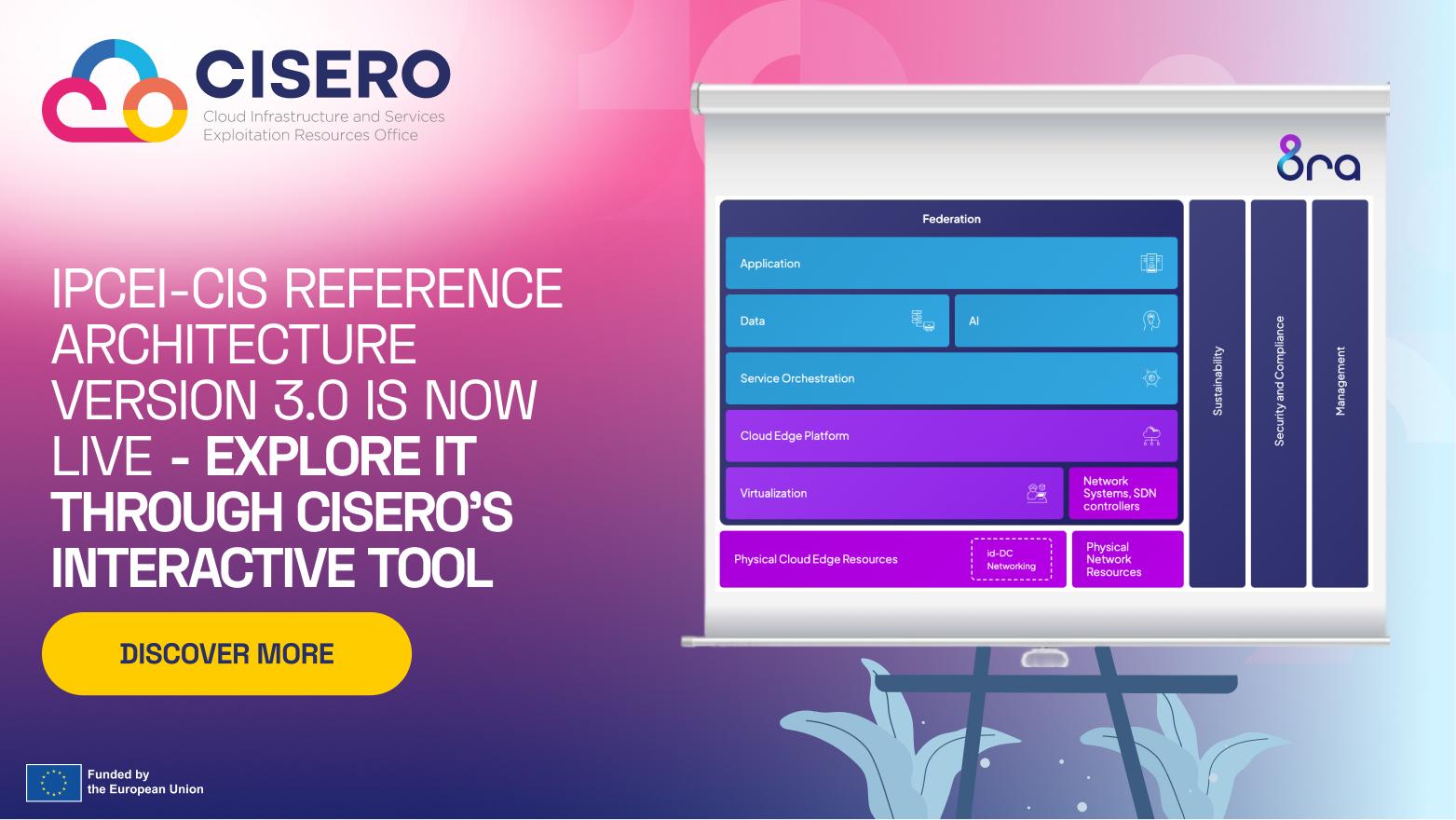
Version 3.0 of the IPCEI-CIS Reference Architecture (ICRA) has been released, marking the latest evolution of the framework guiding the development of Europe's federated Multi-Provider Cloud-Edge Continuum. Developed by the 8ra Initiative, the architecture supports the design of next-generation, data-driven applications across sectors including manufacturing, mobility, energy and AI integration.
To help stakeholders explore the updated framework, CISERO has published an interactive version of the Reference Architecture, giving partners and the wider community an accessible way to navigate its layers and cross-cutting domains.
What's new in Version 3.0
Version 3.0 builds on the previous releases of the architecture, with expanded context on how the Reference Architecture connects to the broader IPCEI-CIS mission. The update includes deeper sections on federation, sustainability and AI, reflecting the growing maturity of pilot and integration work across the initiative.
The architecture continues to guide the execution of pilot and integration scenarios by enabling interoperability across diverse IPCEI-CIS implementations. As a strategic instrument within 8ra, it gives more than 120 partners across 12 EU Member States a shared reference model to position their technologies and roles, supporting 8ra's goals of technological federation and cross-border digital integration.
A modular, layered framework
The architecture is structured as a layered, modular model spanning the full cloud-edge stack, from physical infrastructure to AI:
Application Layer – End-user applications and function catalogues.
Data Layer – Trusted, distributed data exchange across the continuum.
AI Layer – Fundamental set of advanced functionalities.
Service Orchestration Layer – Unified, automated coordination of services.
Cloud-Edge Platform Layer – Lifecycle management and service deployment.
Virtualisation Layer – Abstraction of compute, storage and networking resources.
Network Systems Layer – Management of virtual and physical network components.
Physical Layer – Underlying hardware and connectivity infrastructure.
These layers are supported by four cross-cutting domains:
Sustainability – Optimisation for energy efficiency and renewable resource integration.
Federation – Mechanisms enabling seamless provider collaboration, including dynamic service handovers and alignment with the EU Data Act.
Management – Integrated capabilities for monitoring, SLA compliance, automation and resource accounting.
Security and Compliance – Safeguarding data integrity, access control and compliance with industry standards and regulations.
Explore the architecture
The full document is available for download on the 8ra website and Library.
CISERO's interactive version offers a guided way to explore each layer and domain in detail.