Europe needs sovereign AI fast: IPCEI-CIS results show it can be done
19, November, 2026
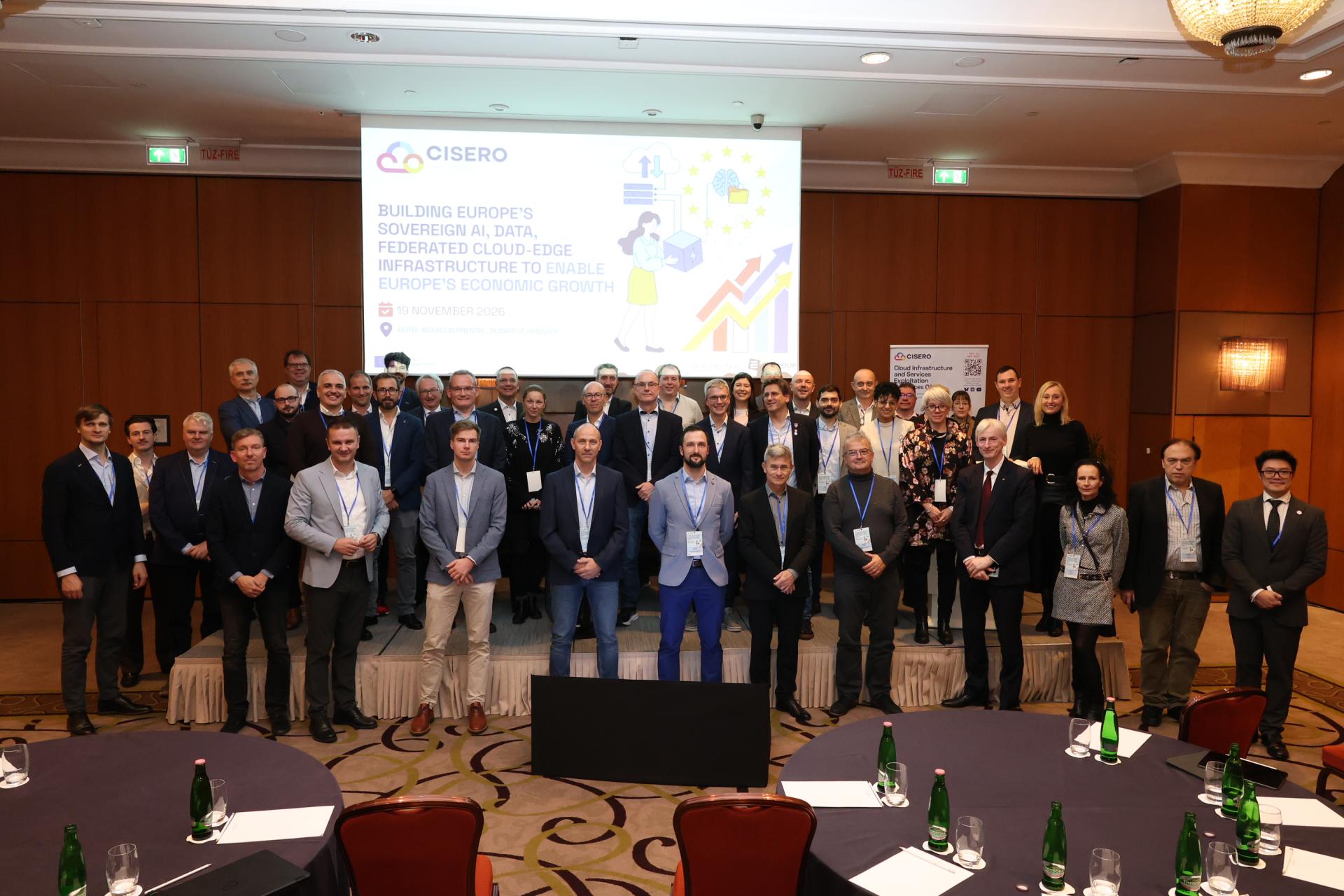
Europe is preparing its first Important Project of Common European Interest on artificial intelligence, and the pace of global AI development leaves little time to turn plans into deployed technology. IPCEI-CIS, the Important Project of Common European Interest on Next Generation Cloud Infrastructure and Services, shows that this is possible: its results are moving from research and pilots into products that companies and public institutions can use today. At the CISERO Spillover event in Budapest on the 19th November, technology providers, national governments, the European Commission and companies from Central and Eastern Europe discussed how to bring these results to new users, and how to do it quickly.
Results that travel
IPCEI-CIS brings together 19 direct projects and 110+ national projects in 12 Member States. CISERO, funded under the Digital Europe Programme, supports these projects in the exploitation of their results. The CISERO Platform connects them with partners, users and open-source assets, and the IPCEI-CIS Sustainability Roadmap sets out a path for keeping results in use over the long term. Working together with the 8ra Initiative, CISERO also supports IPCEI-CIS governance. Its Dissemination and Exploitation programme supports taking results to companies, sectors and regions outside the direct participants, as the Budapest Spillover event did.
In Budapest, a showcase opened by Mauro Boldi (TIM, Head of the IPCEI-CIS Facilitation Group) presented results from Villanova (Ambiti8n project), Bosch and SAP (Apeir8ra project) that are already moving towards industrial use.
COIOS: sovereign AI built under IPCEI-CIS
The event's co-organiser gave one of the clearest examples. COIOS, a sovereign AI platform that the Hungarian company E-Group developed through its FedEU.ai project within IPCEI-CIS, was launched in Budapest and will be available in more than 20 European countries through the partner network of the technology distributor Arrow. It runs on an organisation's own infrastructure, offline if needed, so confidential data stays in-house and outside foreign jurisdiction. AI agents work within existing access rights, their actions are logged, and the organisation chooses and switches its own models.
In a hospital demonstration, COIOS coordinated patient discharge across several separate systems in minutes rather than days, with the clinical decision left to the physician. The same approach can support banks reviewing risk documentation, manufacturers handling technical documentation and public administrations managing confidential records.
Ready for IPCEI AI
On 16 September 2026, the European Commission welcomed the plan of 19 Member States to set up the first IPCEI on artificial intelligence, and 11 of them have started pre-notifying their projects for State aid assessment. In October, Executive Vice-President Teresa Ribera called for faster and simpler IPCEI procedures. With IPCEI-CIS, Europe does not start from zero: cloud-edge infrastructure, interoperability work and sovereign AI applications already exist and are reaching the market. Building on these results is the fastest way for Europe to move from AI plans to AI in use.
From adoption barriers to market demand

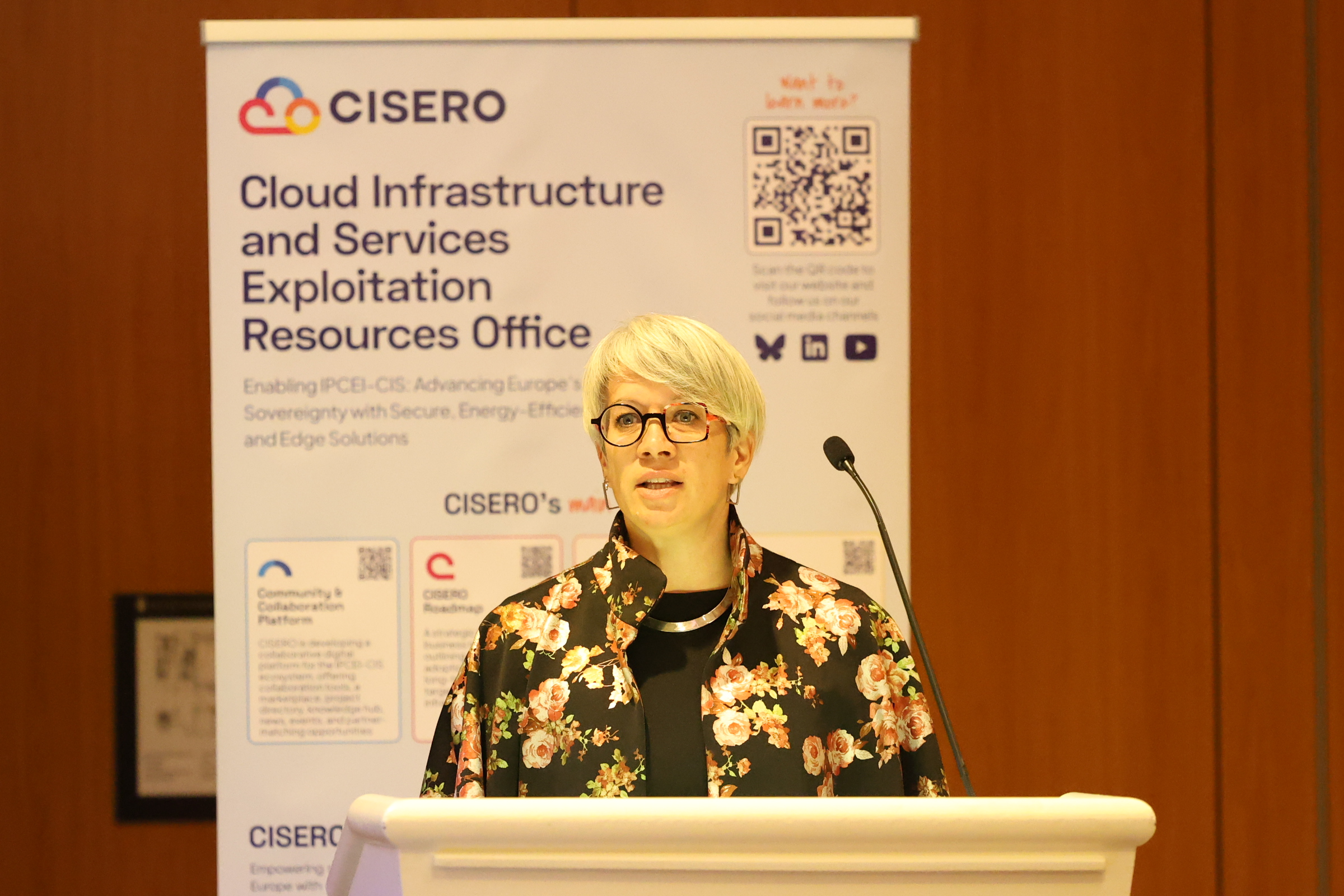
Hungarian Government representatives, including State Secretary for Digitalisation Andrea Polereczki, Ágnes Fábián, Secretary of State for Economic Development of and Péter Fehér, Deputy State Secretary for Artificial Intelligence, together with Thomas Skordas, Deputy Director-General of DG CONNECT, set out national and European views on scaling cloud-edge and AI capacities.
Two roundtables, with SAP, Deutsche Telekom, Engineering, Result, TNO and E-Group, discussed how to connect IPCEI-CIS assets into a European AI continuum and how to remove barriers in commercialisation, public procurement and investment.
Interoperability ran through the programme. Working together with CISERO, the 8ra Initiative is developing the technical framework that allows infrastructure from different providers to work together while customers keep the freedom to choose.
"Europe's digital competitiveness depends not only on excellent research, but also on infrastructure and software that businesses and public institutions can rely on and build upon, tools that enable and safeguard Europe's digital sovereignty. Meetings like the one in Budapest bring Europe's technological capabilities into direct contact with the real-world needs of businesses and public institutions," said Matthias Kuom, CISERO Project Coordinator.
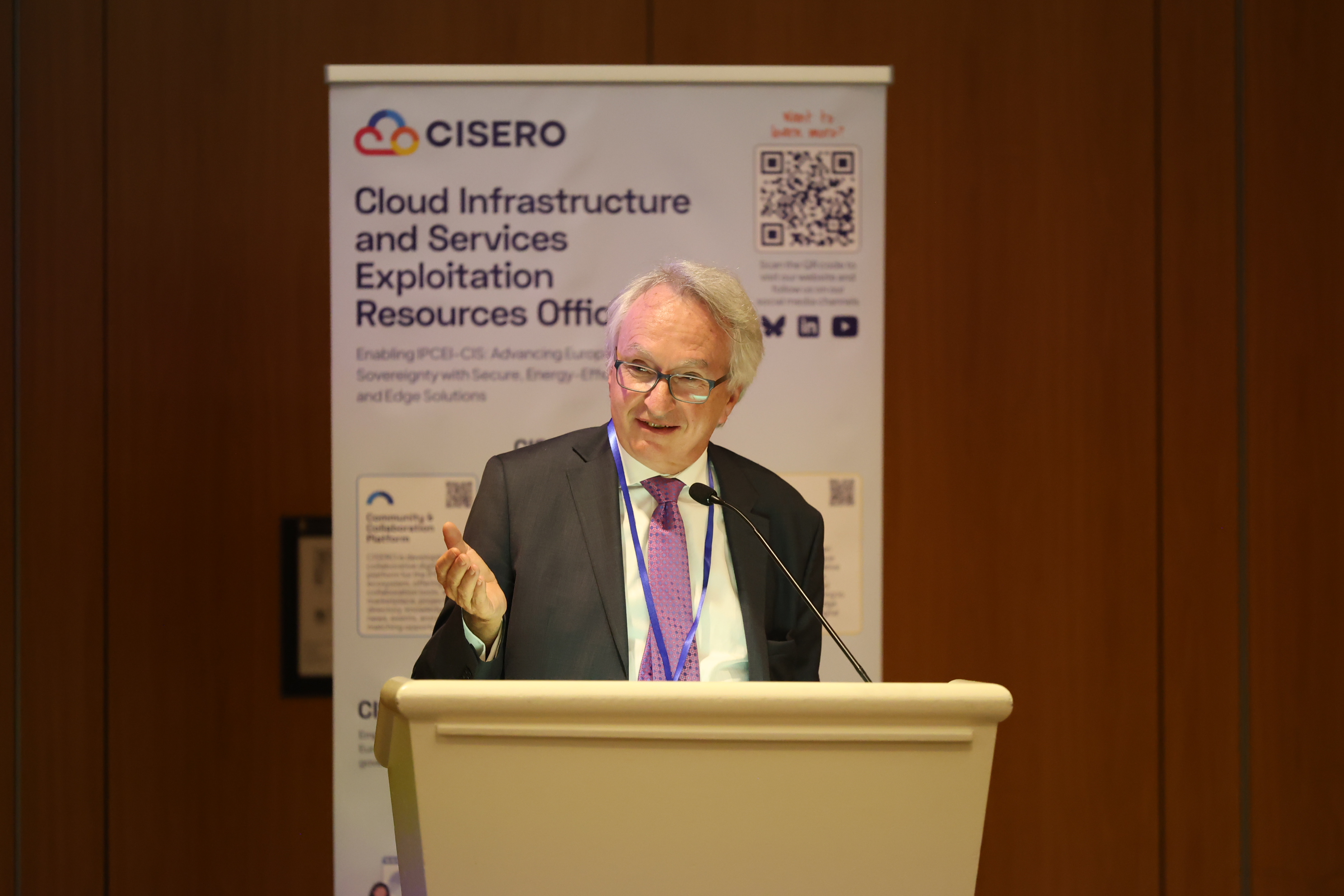
"The strength of Europe's cloud and AI infrastructure lies in the ability of different systems to work together reliably. For users, sovereignty becomes tangible when they control how their data is used and switch providers without having to rebuild everything from scratch," said Mauro Boldi.
Next steps
Organisations interested in IPCEI-CIS results can find partners, solutions and open-source assets on the CISERO Platform.